Wed, Thu, Fri, Sat: 9am - 6pm
.jpg)
Hearing Aids in Freehold, NJ
Choosing the right hearing aid in Freehold and Monmouth County involves understanding what each manufacturer does best and where they might have limitations.
“Hearing Aids are not just selected here - they are verified, measured, and personalized using comprehensive best-practices”
Could You Benefit From Hearing Aids?
Hearing loss develops gradually — so gradually that most people wait an average of seven years between noticing a change and seeking help. If any of the following sound familiar, a hearing evaluation is the right first step:
-
You frequently ask people to repeat themselves
-
Conversations in restaurants or group settings feel exhausting
-
You've turned the TV volume up higher than others prefer
-
Phone calls feel unclear or muffled
-
You find yourself nodding along in conversations without fully hearing what was said
-
Others have mentioned you seem to mishear or misunderstand them
Hearing aids are clinically proven to benefit patients with mild, moderate, severe, and profound hearing loss. They are also an effective component of tinnitus management for patients who experience ringing or buzzing in their ears. Dr. Haynie will review your audiogram results in detail and discuss whether hearing aids are appropriate — and if so, which options best match your hearing loss, lifestyle, and preferences.
Prescription Hearing Aids vs. Over-the-Counter
Since the FDA's 2022 ruling allowing hearing aids to be sold directly to consumers without a prescription, patients are increasingly weighing over-the-counter devices against professional hearing aids. Understanding the difference matters — and the right choice depends on your specific hearing loss.
Over-the-counter hearing aids are consumer devices designed for adults with perceived mild to moderate hearing loss. They are self-fitted using a smartphone app and apply a generic amplification profile. They are not customized to an audiogram, are not verified with real ear measurement, and are not supported by professional ongoing care.
Prescription hearing aids are medical devices programmed specifically to your audiogram by a licensed audiologist. Every parameter — the amount of amplification at each frequency, compression ratios, directionality settings, noise reduction behavior — is calibrated to your specific hearing loss pattern and verified with real ear measurement to confirm performance in your actual ear canal. They are supported by professional care throughout the life of the device.
The most important distinction is not hardware — it is the clinical process surrounding the fitting. A prescription hearing aid fitted and verified by a doctoral-level audiologist will consistently outperform the same device fitted to manufacturer defaults, and will dramatically outperform an OTC device for any patient with documented hearing loss.
If you are unsure whether you need professional hearing aids or whether an OTC device might be sufficient, the right first step is a comprehensive diagnostic hearing evaluation. The audiogram results will clarify which path is clinically appropriate for your specific hearing loss — and you will leave the appointment with accurate information rather than a guess.
Read our blog here on the differences between prescription hearing aids vs. OTC devices

Hearing Aid Styles - Finding the Right Fit

Behind-The-Ear (BTE)
The housing sits behind the ear and connects to a custom earmold or dome that fits in the ear canal. BTE hearing aids are highly versatile, suitable for mild through profound hearing loss, and available with powerful amplification. Their larger size makes them easier to handle and offers longer battery life.

Receiver-in-Canal (RIC)
The most popular hearing aid style today. A small housing sits behind the ear while a thin wire delivers sound directly into the ear canal via a receiver (speaker). RIC hearing aids are discreet, comfortable, and available in rechargeable versions across all major brands. Best suited for mild to severe hearing loss.

In-the-Ear (ITE)
Custom-made to fill the outer bowl of the ear. ITE hearing aids are easy to insert and remove, making them a good option for patients with dexterity challenges. They accommodate mild to severe hearing loss and offer directional microphone capability.
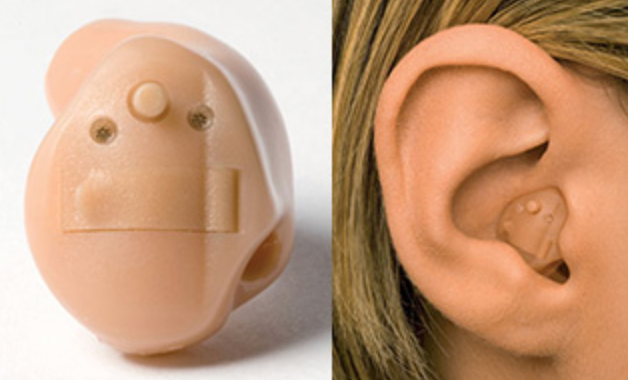
In-the-Canal (ITC)
Smaller than ITE, fitting partially in the ear canal. ITC hearing aids are less visible than full-shell styles while remaining easy to handle. Suitable for mild to moderate hearing loss.
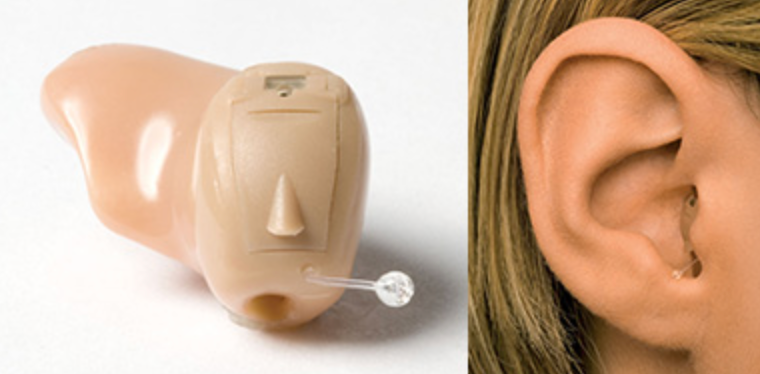
Completely-in-Canal (CIC)
Fits deeply in the ear canal and is nearly invisible when worn. CIC hearing aids are cosmetically appealing and reduce wind noise naturally due to their placement. Best for mild to moderately severe hearing loss.

Invisible-in-Canal (IIC)
The deepest and most discreet hearing aid style available. Worn entirely inside the ear canal and invisible to others. IIC instruments are custom-fit from an ear impression and best suited for patients with mild to moderate hearing loss who prioritize cosmetics.
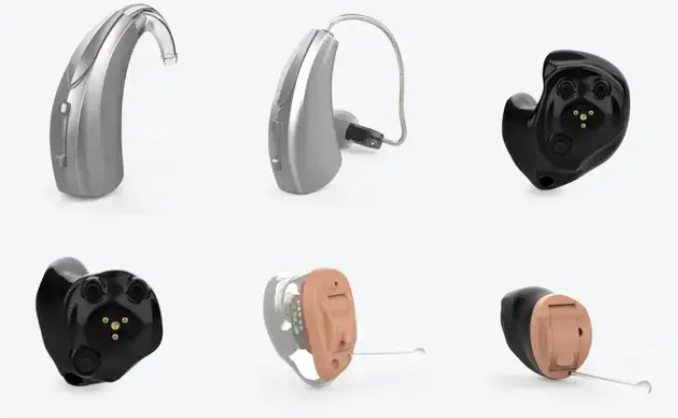
The right style depends on your hearing loss configuration, ear canal anatomy, lifestyle, and dexterity. Dr. Haynie will guide you through the options that are clinically appropriate for your specific audiogram results.
Why the Fitting Matters as Much as the Device
The hearing aid brand you choose matters — but where and how you get fitted matters just as much.
Studies consistently show that hearing aids programmed without objective verification are frequently
under-amplifying or over-amplifying sound, which leads to dissatisfaction and devices that end up in a drawer.
At Haynie Audiology & Hearing Associates, every hearing aid fitting follows a verified, best-practice protocol:
Real Ear Measurement — A probe microphone placed in the ear canal confirms that your hearing aids are delivering exactly the right amount of amplification for your specific ear canal shape and hearing loss — not manufacturer default settings. Only about 20% of audiology clinics perform this step.
Hearing Aid Test Box Verification — Each device is tested in a calibrated test box to confirm it meets manufacturer specifications before it ever goes in your ear.
Validated Outcome Questionnaires — Your subjective experience of the fitting is documented at each follow-up appointment to track real-world benefit over time.
This protocol reflects what audiology's clinical guidelines define as best practice. It's what distinguishes a verified fitting from an estimated one — and it's the standard at our Freehold, NJ office for every patient we see.
Choosing the right hearing aid involves understanding what each manufacturer does best and where they might have limitations. While all major hearing aid brands offer quality technology, each has developed unique strengths that make them more suitable for specific hearing losses, lifestyles or preferences.
We partner with the most reputable and trusted hearing aid manufacturers to ensure that you receive the best possible hearing solution.

Modern hearing aids include features such as:
-
Rechargeable batteries
-
Bluetooth streaming
-
Smartphone app control
-
Background noise reduction
-
Directional microphones
-
Artificial intelligence and automatic sound adjustments
-
Waterproof or water-resistant options
-
Remote programming and Telehealth support
-
Compatibility with hearing assistive technology
By working with multiple manufacturers, we are able to recommend technology based on what is clinically best for you — not based on a single product line.
Top Hearing Aid Brands

Starkey is known for making some of the most advanced custom and non-custom hearing aids on the market. Starkey is the only major hearing aid manufacturer headquartered in the United States, and their commitment to innovation shows in their product line. The Starkey Omega AI features onboard artificial intelligence that continuously learns and adapts to your sound environment, along with health monitoring features including fall detection, body and activity tracking, and heart rate monitoring. Starkey is an excellent choice for patients who want technology that extends beyond just hearing — supporting overall wellness and safety.

Oticon's hearing philosophy centers on BrainHearing — the idea that hearing happens in the brain, not just the ears. Rather than filtering and focusing sound artificially, Oticon hearing aids support the brain's natural ability to process a full acoustic scene. Their latest Oticon Intent and Reveal use motion sensors to detect what you're doing and adjust sound processing accordingly — whether you're in a conversation, walking, or in a group setting. Oticon devices feature the newest LE Audio Bluetooth standard and Auracast broadcast technology for enhanced wireless accessibility and connectivity.

Phonak is one of the world's most widely used hearing aid brands and is particularly known for its ability to separate speech from background noise using advanced artificial intelligence. Their Phonak Lumity platform offers universal Bluetooth compatibility — connecting directly to virtually any Bluetooth device, not just iPhones. Phonak also offers the Slim, a sleek and discreet receiver-in-canal design, and is the leading brand for patients with single-sided hearing loss through their CROS and BiCROS solutions. Phonak is an excellent choice for active patients and those who prioritize effortless connectivity.
More recently, Phonak released their flagship Infinio Ultra Sphere and the EON Sphere for major improvements in understanding speech in background noise.

Signia hearing aids are engineered for patients who struggle most in challenging listening environments — crowded rooms, restaurants, and group conversations where multiple speakers are present. Their Integrated Xperience (IX) platform uses two synchronized processors working together to track the speech of the people you want to hear, even when they're moving or positioned to the side. The Signia Pure Charge&Go IX is a popular rechargeable option, and Signia's Own Voice Processing technology addresses a common complaint — ensuring your own voice sounds natural and comfortable from day one.
More recently, Signia release their newest flagship, Signia Charge & Go MaX.

Widex is known for producing some of the most natural-sounding hearing aids on the market, making them a particular favorite among musicians and patients who are highly sensitive to sound quality. Their Zero Delay processing ensures sound reaches the ear with virtually no artificial processing lag, preserving the spatial and tonal cues that make listening feel natural. The Widex Allure, Allure AI and SmartRIC combine this natural sound philosophy with rechargeable convenience and Bluetooth streaming.
Why Independence Matters for Your Recommendation
Some hearing centers in New Jersey are owned by — or have preferred vendor agreements with — specific hearing aid manufacturers. When a hearing center is part of a corporate network tied to one manufacturer, their product recommendations are structurally limited to that manufacturer's devices, regardless of what may be clinically optimal for your audiogram.
Haynie Audiology is an independently owned, single-provider practice with no affiliation to any hearing aid manufacturer and no preferred vendor relationships. We carry Oticon, Phonak, Starkey, Signia, and Widex — all five leading prescription hearing aid manufacturers — and we fit all current technology levels from each. Our recommendation is based on one thing: which device best matches your audiogram, your lifestyle, and the independent clinical evidence.
This means that if Phonak performs best for your specific hearing loss profile, we recommend Phonak. If Oticon's BrainHearing architecture is a better clinical fit, we recommend Oticon. If Widex's ZeroDelay processing is most appropriate for a musician or someone highly sensitive to sound quality, we recommend Widex. There is no quota, no preferred brand, and no manufacturer incentive shaping what we suggest.
Your Hearing Aid Trial Period
Selecting hearing aids is a significant decision — and you should not have to commit to that decision without the opportunity to experience how the devices actually perform in your daily life.
Every hearing aid we fit at Haynie Audiology comes with a trial period during which you wear the devices in every environment that matters to you — your workplace, your kitchen, your regular restaurant, your place of worship, your car. During the trial period you return for adjustments as needed as your brain and auditory system adapt to amplification. If at the end of the trial the devices are not meeting your expectations, we work with you to identify whether a programming adjustment, a different device, or a different technology level would better serve your hearing profile.
Our goal is that you leave with hearing aids that genuinely improve your quality of life — not hearing aids that end up in a drawer. The trial period is our commitment to that outcome.
Hearing Aid Costs, Insurance, and Financing
Prescription hearing aids from the leading manufacturers typically range from $2,000 to $7,000 per pair depending on technology level, brand, and the services included. No two patients pay the same amount because no two patients have the same insurance situation, the same degree of hearing loss, or the same technology needs.
What insurance typically covers: Medicare Part B covers diagnostic hearing evaluations but does not currently cover hearing aids. Many Medicare Advantage plans include a hearing aid benefit — dollar allowances vary significantly by plan. Most major commercial insurance plans include some level of hearing aid coverage, subject to your specific benefits. We verify your insurance benefits before any evaluation appointment at no charge so you know exactly what is covered before any decisions are made.
Third-party hearing benefit administrators: Many insurance plans use third-party hearing benefit programs — including TruHearing, HearUSA, and Amplifon — that provide contracted pricing and may require specific brands or technology tiers. We are familiar with these programs and navigate them with you.
Financing: For patients whose out-of-pocket costs exceed what their insurance covers, financing options are available.
The evaluation appointment is the right place to get complete clarity on your specific costs. We will review your benefits, explain your out-of-pocket exposure, and help you understand every option available before you make any decision.
Read our blog here on how to maximize your hearing aid insurance benefit in New Jersey
Ready to learn more about what goes into a hearing aid fitting?
From real ear measurement and test box verification to follow-up care, adjustments, and long-term programming — our hearing aid fitting page walks through everything that happens after you choose your devices.
Audiology Best Practices
Regardless of which hearing aid brand is selected, success depends on following comprehensive best practices during the fitting process. We use Real Ear Measurement and Test Boxes to verify that your hearing aids are programmed correctly to your hearing loss prescription, not just manufacturer estimates— ensuring your hearing aids are performing correctly from day one and adjusted as your brain adapts to amplification over time.
We serve patients throughout Monmouth County including Manalapan, Marlboro, Howell, Middletown, Aberdeen, Hazlet, Colts Neck, Red Bank, and all surrounding communities.